| The TBHPP is an independent nonprofit research group. Your kind donations will help support our work and keep this site access free and open to the public. Click here to donate. The TBHPP sincerely thanks these organizations for their support: |
| "Coming to Texas, 1528-1836" Approximately 54% of all enslaved Africans brought to the New World between 1519 and 1700 disembarked in Spanish America, and New Spain (Mexico) received its share through the ports of Veracruz where Africans were first brought and taken for work in the country's gold and silver mines, as servants, field workers and other labors. So numerous were Africans in New Spain that by 1570 the 20,569 Africans there were three times the Spanish population. The Africans spread out through New Spain, including heading north and across the Rio Grande inter-marrying with indigenous people, running away from slavery (marronage) and starting their own communities. Some became the first black Texans. This package examines how Africans first came to this part of the world:
|
| Mailing address: Michael Hurd, Director Texas Institute for the Preservation of History and Culture Prairie View A&M University P.O. Box 519, MS 2100 Prairie View, Texas 77446 Phone: 936-261-9836 Email: [email protected]; [email protected] |






| Unitarian Universal Fellowship of Austin |
 |
| |
 |
| |
 |
| |
 |
| |
 |
| |
 |
| |
 |
| |
 |
| |
 |
| |
 |
| |
 |
| |
 |
| |
 |
| |
 |
| |
 |
| |
 |
| |
 |
| Texas Black History Preservation Project Documenting the Complete African American Experience in Texas -- "Know your history, know yourself" |
| Want to submit an entry? See our submissions page for how you can contribute an entry, essay, photo or other pertinent information. |

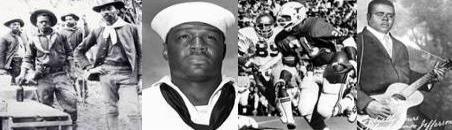
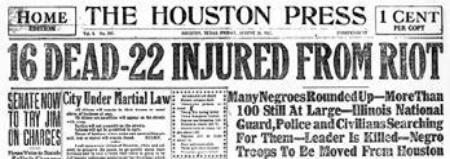
The Houston Riot/Camp Logan Mutiny
The darkest social blemish in Houston's history occurred on the steamy
night of Aug. 23, 1917. The Houston Riot, also called the Camp Logan
Mutiny, is known as the only race riot in U.S. history where more
whites (15) than blacks (4) died. The incident led to the largest court
martial in U.S. military history.
Here, the TBHPP examines that night as well as the events leading to it
and the aftermath that included 19 members of the 24th Infantry (a unit
of the famed "Buffalo Soldiers") being led to the gallows and buried in
practically unmarked graves at Fort Sam Houston in San Antonio. Our
stories include:
- "Camp Logan Riot of 1917": An essay by Roxanne Evans and
Michael Hurd - Angela Holder, history professor at Houston Community College,
Central Campus, is a great niece of one of the 24th Infantry
soldiers hung for alleged participation in the riot. Prof. Holder
writes a personal reflection on the riots. - Expanded Timeline: A history of African Americans in the U.S.
Military - The Crisis Report -- Right's activist Martha Gruening reported on
the Houston violence for the November, 1917 edition of The Crisis
magazine, the NAACP's influential quarterly publication started
by W.E.B. DuBois. - Video: "Buffalo Soldiers history."
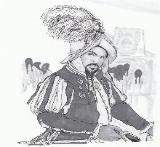
Esteban
Drawing by Kathleen Howell
Drawing by Kathleen Howell

Juneteenth:
"The Emancipation Proclamation --
Freedom Realized and Delayed"
"The Emancipation Proclamation --
Freedom Realized and Delayed"
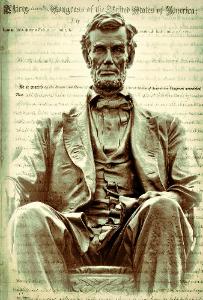
The 150th anniversary of the Emancipation Proclamation was marked in 2013. President Abraham Lincoln signed the
proclamation on Jan. 1, 1863. The order officially freed all slaves within the states or parts of states, basically the
Confederate states, including Texas, that were in rebellion against the Union. However, the proclamation did not
apply to the one million slaves in Union territory who remained in bondage and word of the edict would not
officially reach Texas for another two and half years -- June 19, 1865. View the TBHPP special package on the
Proclamation and Juneteenth, including an essay, video, and images.
proclamation on Jan. 1, 1863. The order officially freed all slaves within the states or parts of states, basically the
Confederate states, including Texas, that were in rebellion against the Union. However, the proclamation did not
apply to the one million slaves in Union territory who remained in bondage and word of the edict would not
officially reach Texas for another two and half years -- June 19, 1865. View the TBHPP special package on the
Proclamation and Juneteenth, including an essay, video, and images.
The TBHPP is presenting this wonderful exhibit on the history of African-American
physicians in Texas courtesy of the Texas Medical Association. Some were born
slaves, such as Franklin R. Robey, MD, of Houston, some were the children of slaves.
Maps, vintage images, and a timeline trace key events starting in 1837 and continuing
until 2009 when TMA elected its first African-American president, William H. Fleming
III, MD, a Houston neurologist. Click here to view the exhibit.
physicians in Texas courtesy of the Texas Medical Association. Some were born
slaves, such as Franklin R. Robey, MD, of Houston, some were the children of slaves.
Maps, vintage images, and a timeline trace key events starting in 1837 and continuing
until 2009 when TMA elected its first African-American president, William H. Fleming
III, MD, a Houston neurologist. Click here to view the exhibit.

| Africans have had a presence in Texas for almost 500 years, maybe longer. The territory was the northernmost area of New Spain (Mexico) in 1528 when Esteban (Estevanico), a Moroccan Moor servant, waded ashore with a group of Spanish conquistadors near what is now Galveston Island and established himself as the first known African in what would become Texas. Since, African Americans have contributed significantly in all facets of the building of the Lone Star State -- its infrastructure, image, and culture. For that, the Texas Black History Preservation Project is charting every aspect of the black experience in Texas as an online encyclopedia. |

Subscribe to our newsletter, it's free! |
| TBHPP, The Blog! Prairie View A&M history professor Ron Goodwin's bi-weekly blog is exclusive to TBHPP, addressing black history and contemporary African American issues. Follow, comment, and join in the discourse. Read it here. |
#MyUntold -- Wells Fargo Bank storytelling campaign for African Americans

Wells Fargo Bank is giving everyday African Americans an opportunity to tell their stories as a way to present new
and varied perspectives on what it means to be African American. In the company's "#MyUntold" story- telling
movement, members of the community are invited to submit their stories on social media platforms in video,
pictures, or words by using the phrase #MyUntold. To share your untold story, simply enter the phrase #MyUntold
on Facebook, Twitter, etc. To view videos from the campaign, visit the Wells Fargo YouTube page. For
suggestions on creating and sharing your story, see the Wells Fargo storytelling tip sheet here.
and varied perspectives on what it means to be African American. In the company's "#MyUntold" story- telling
movement, members of the community are invited to submit their stories on social media platforms in video,
pictures, or words by using the phrase #MyUntold. To share your untold story, simply enter the phrase #MyUntold
on Facebook, Twitter, etc. To view videos from the campaign, visit the Wells Fargo YouTube page. For
suggestions on creating and sharing your story, see the Wells Fargo storytelling tip sheet here.
For Texas Black History Calendar, please click here.